Understand the request
Use natural language, current system state, recent events, and relevant context to work out what the user is asking for.
Independent software startup
TylerInnovated is building ORION, an AI orchestration platform that turns a request into a controlled workflow, watches the systems involved, and reports whether the intended result actually happened.
Why ORION exists
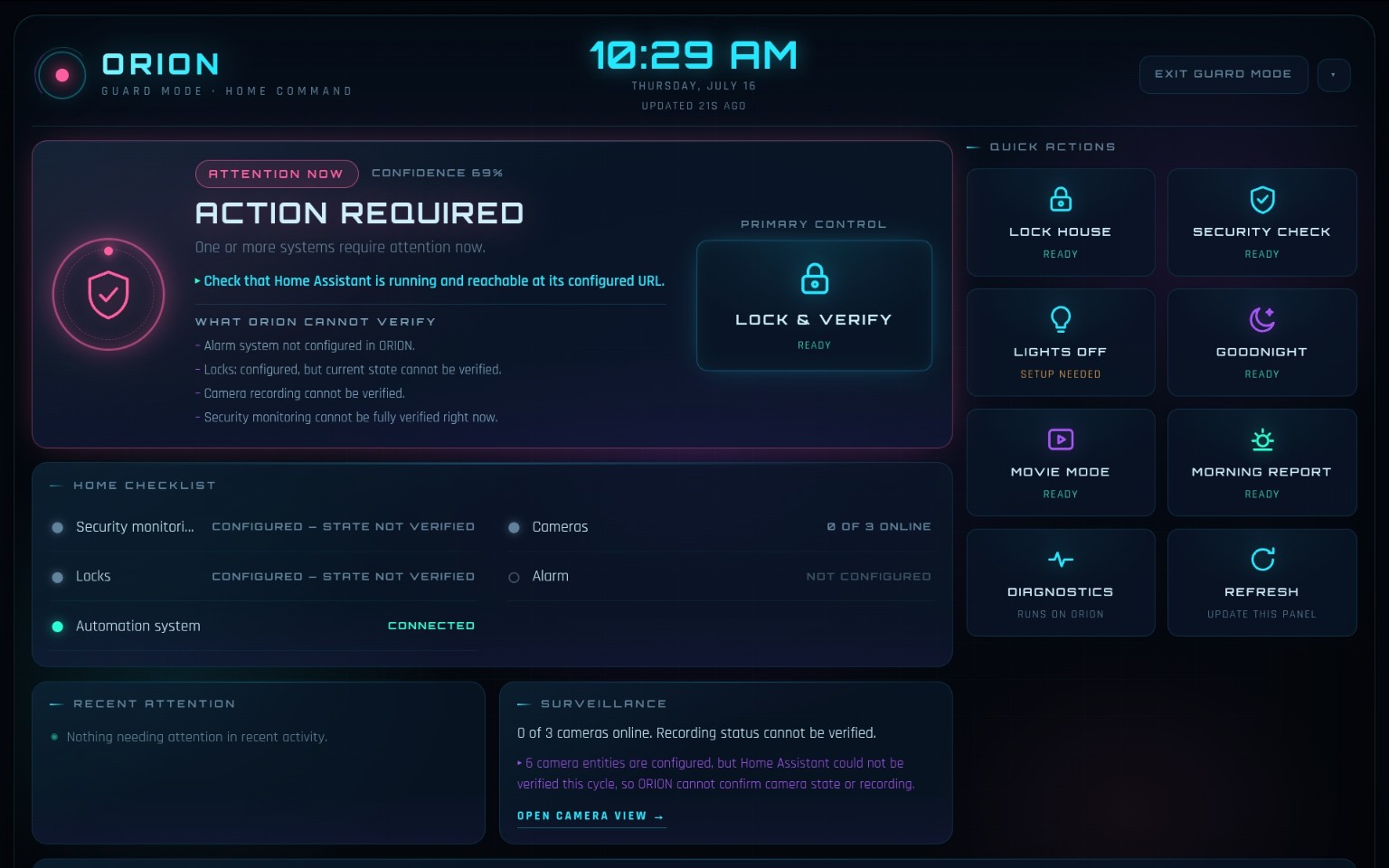
A normal assistant may send a command and report success. ORION checks live state, chooses a controlled tool or workflow, and looks again after the action. If a service is offline or the result cannot be confirmed, the system should say so plainly.
Use natural language, current system state, recent events, and relevant context to work out what the user is asking for.
Send the task through approved automations, APIs, local services, and connected devices instead of giving the model direct control.
Compare the requested outcome with observable system state and report success, failure, partial completion, or uncertainty.
Product evidence
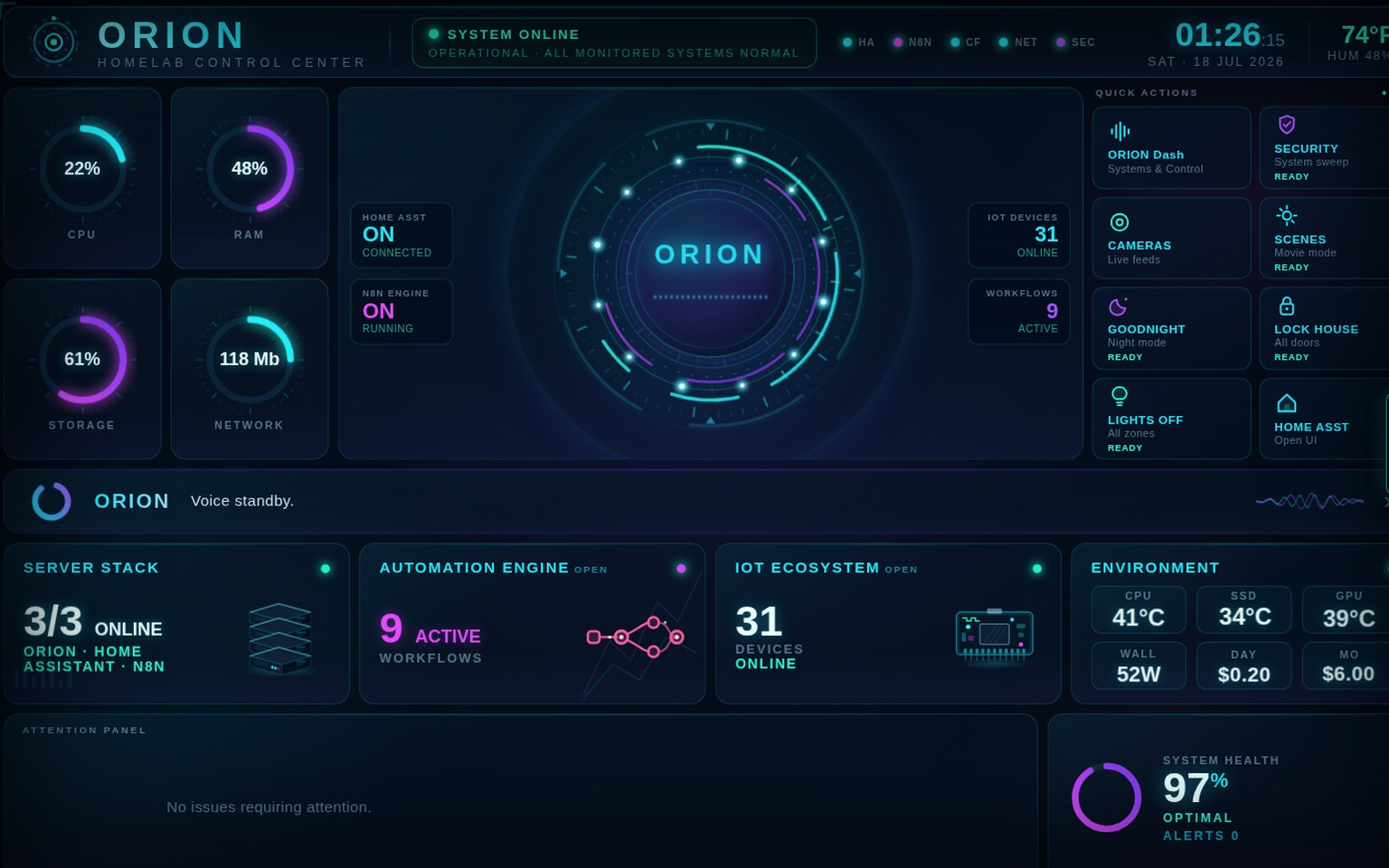
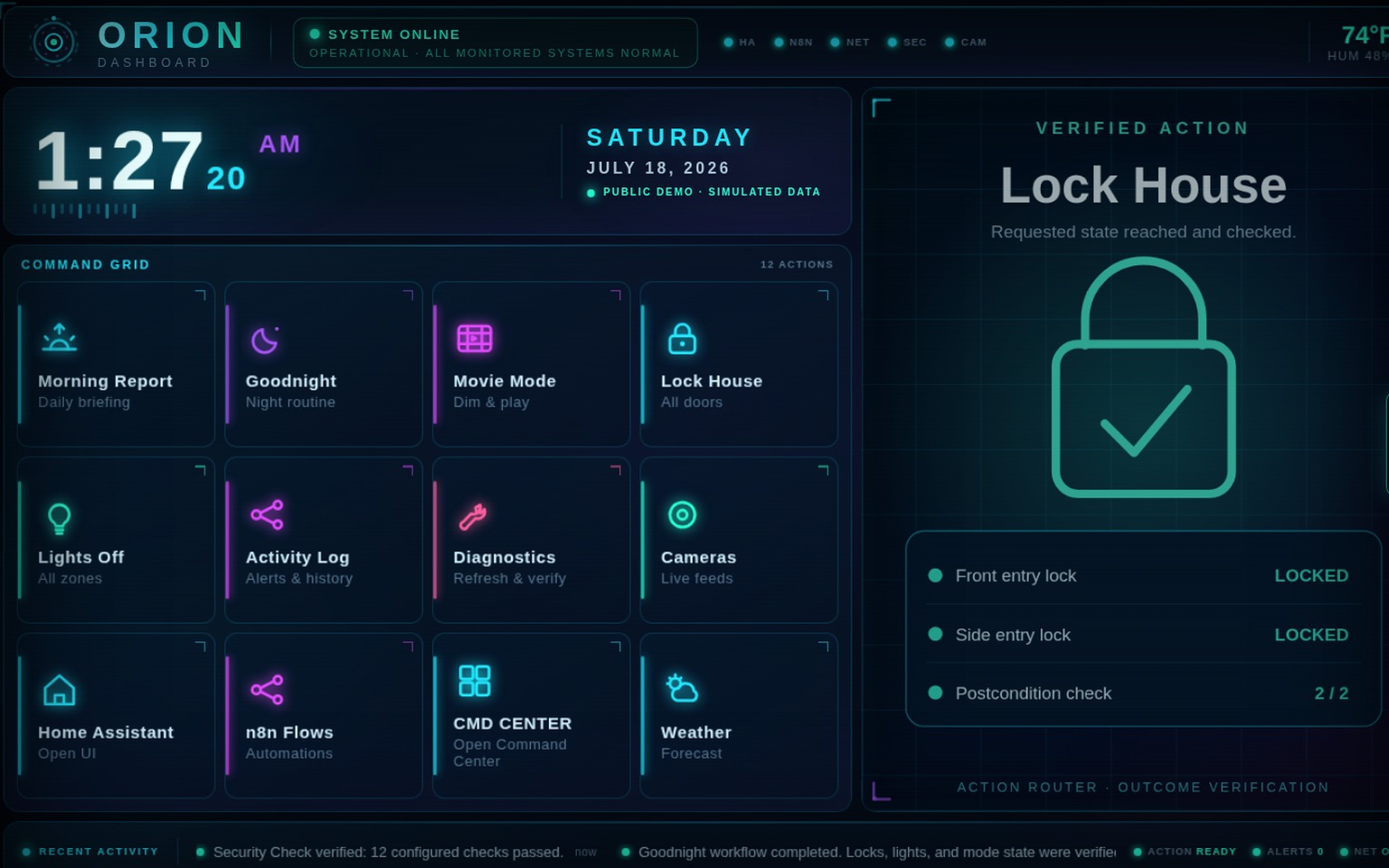
The private development deployment includes a Node.js service, multiple operational interfaces, system diagnostics, quick actions, event history, and status views for Home Assistant, n8n, devices, cameras, and local services. The public demo mirrors those workflows with sample data and no access to private infrastructure.
Operational proof
The current ORION V1 codebase separates the browser interface, the action router, live system state, evidence collection, and outcome verification. It also includes deterministic tests and release checks for the status contract, action routing, security verification, notification policy, and public-link handling.
A local Node.js service owns system truth and exposes stable status, events, links, and action contracts.
Home Assistant provides connected-state data while n8n handles defined automation workflows.
Actions are not reported as successful until the requested postcondition can be observed.
A safe browser-only environment lets reviewers explore the product without reaching private systems.
Initial focus
That environment is a useful proving ground because it contains real devices, changing system state, several vendors, local services, automations, and actions that should not be treated as successful without a check.
How it works
ORION keeps AI reasoning separate from the systems that perform the action. The model can interpret and plan, but approved tools handle execution and ORION checks the result.
Development status
Founder and public identity
Tyler leads product development, system architecture, interface design, and the current ORION implementation. Public third-party profiles are linked below for independent verification.
About TylerInnovated
TylerInnovated is led by Tyler Hanny in the United States. The current work is focused on product development, technical validation, and turning ORION into a system that can be deployed beyond its first environment.